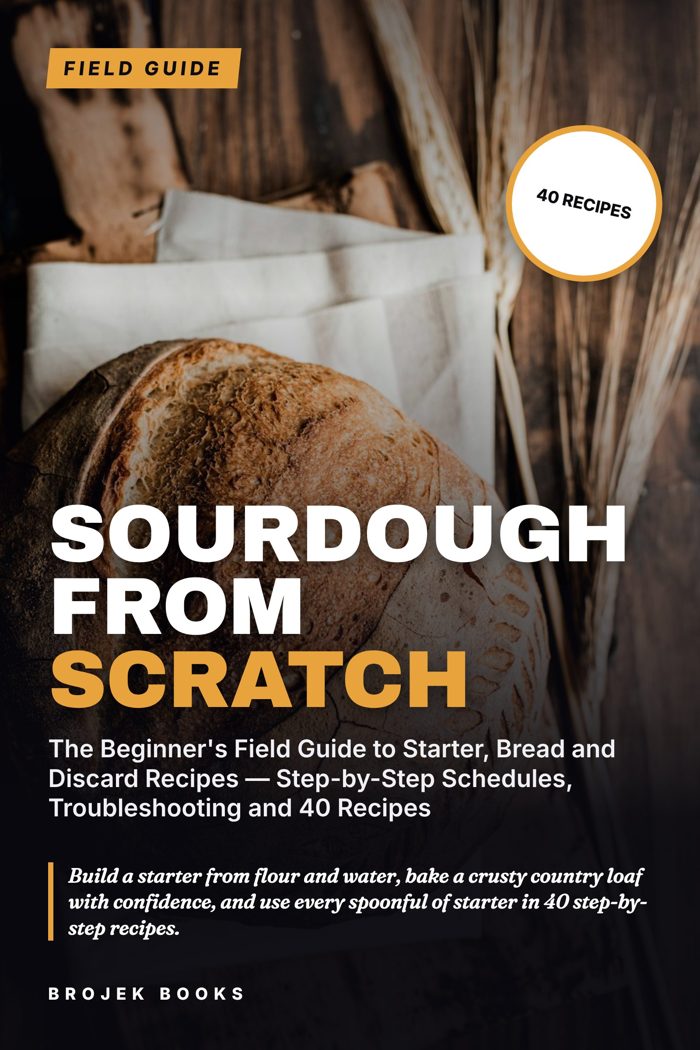
Sourdough from Scratch
The Beginner's Field Guide to Starter, Bread and Discard Recipes — Step-by-Step Schedules, Troubleshooting and 40 Recipes
Build a starter from flour and water, bake a crusty country loaf with confidence, and use every spoonful of starter in 40 step-by-step recipes.
What you get
- A 14-day starter timeline with what to expect each day and a troubleshooting table
- The master country loaf with weekday and weekend schedules, hour by hour
- Baker's percentages made simple, with worked examples in cups and grams
- A crumb diagnosis table for dense, flat, gummy or over-proofed loaves
- Adjustments for hot kitchens, cold kitchens and high altitude
- Baking methods with a Dutch oven and without one
- 40 complete recipes, from bagels and pizza to discard crackers and waffles
- A week-by-week 30-day plan and a one-page quick-reference card
Most sourdough guides either drown you in theory or hand you a recipe that only works in someone else's kitchen. This field guide does neither. It shows you what to do each day, what you should see, and what to change when your dough does not look right.
You start with an empty jar. A day-by-day timeline takes you from flour paste to a bubbling starter in 7 to 14 days, including the Day 4 slump that makes most beginners quit too early. Then you learn to keep it alive with five minutes a day, or once a week in the fridge.
Next comes the master country loaf, with a full weekday schedule and a weekend schedule you can follow to the hour. You learn stretch and folds, the five cues that bulk fermentation is done, shaping, cold retard, scoring, and baking with or without a Dutch oven. Baker's percentages are explained with worked examples, in US cups with grams alongside. A crumb diagnosis table tells you exactly what went wrong and how to fix it. Hot kitchen, cold kitchen or high altitude? There is a chapter for that.
Then put your starter to work with 40 complete recipes: country loaf variations, soft sandwich bread, baguette-style loaves, bagels, English muffins, pizza dough, focaccia, rolls, cinnamon rolls, brioche, crackers, pancakes, waffles, biscuits and crumpets. Every recipe lists yield, time, ingredients and numbered steps, with food-safety notes where they matter.
Finish with a 30-day plan that takes you from your first feeding to your fifth confident loaf.
What's inside
- How to Use This Field Guide
- The Short Shopping List: Tools and Ingredients That Matter
- Your Starter, Day by Day: From Flour Paste to Bubbling Culture
- Keeping It Alive: Feeding, Storing and Reviving Your Starter
- Baker's Percentages Without the Headache
- The Master Country Loaf: One Formula, Two Schedules
- Mixing, Stretch and Folds, and Reading Bulk Fermentation
- Shaping, Cold Retard and Scoring
- Baking With and Without a Dutch Oven, and Reading Your Crumb
- Hot Kitchens, Cold Kitchens and High Altitude
- Recipes 1–10: Ten Country Loaf Variations
- Recipes 11–19: Sandwich Breads, Baguettes, Bagels and Rolls
- Recipes 20–26: Pizza, Focaccia and Flatbreads
- Recipes 27–33: Sweet Breads, Rolls and Treats
- Recipes 34–40: Discard Recipes: Pancakes, Waffles, Crackers and More
- Your First 30 Days: A Week-by-Week Plan
Read a sample
A sourdough starter is a stable community of wild yeasts and lactic acid bacteria living in flour and water. The yeast makes gas that raises bread. The bacteria make acids that give flavor and keep unwanted microbes out. You do not need grapes, pineapple juice or a starter from a friend. Flour already carries everything you need. Mix equal weights of flour and water. Every 24 hours, keep a small amount, throw the rest away (or save it as discard after Day 7), and add fresh flour and water. Once the starter reliably doubles within 4 to 8 hours of a feeding, it is ready to bake with. The big rise on Day 2 or 3 is usually not the yeast you want. Early on, a mix of bacteria grows fast and produces gas and strange smells. As the mixture turns acidic, those bacteria die off and the jar goes quiet. Acid-tolerant yeast and lactic acid bacteria then take over, slowly at first. Almost every new baker thinks the starter died on Day 4. It did not. Keep feeding on schedule.
Questions
What format is it?
A PDF ebook you download right after purchase. It works on phones, tablets, Kindle apps that open PDFs, and computers.
How do I get it?
After checkout you get a download link by email and on the confirmation page.
Who wrote it?
Brojek Books, the publishing imprint of Brojek Games (brojekgames.com).
 The AI Toolbox
 500 AI Prompts That Actually Work
 Candlestick Charts Made Simple
 Investing for Beginners
 The Debt-Free Blueprint
 Conversational Spanish in 30 Days
 Unhooked
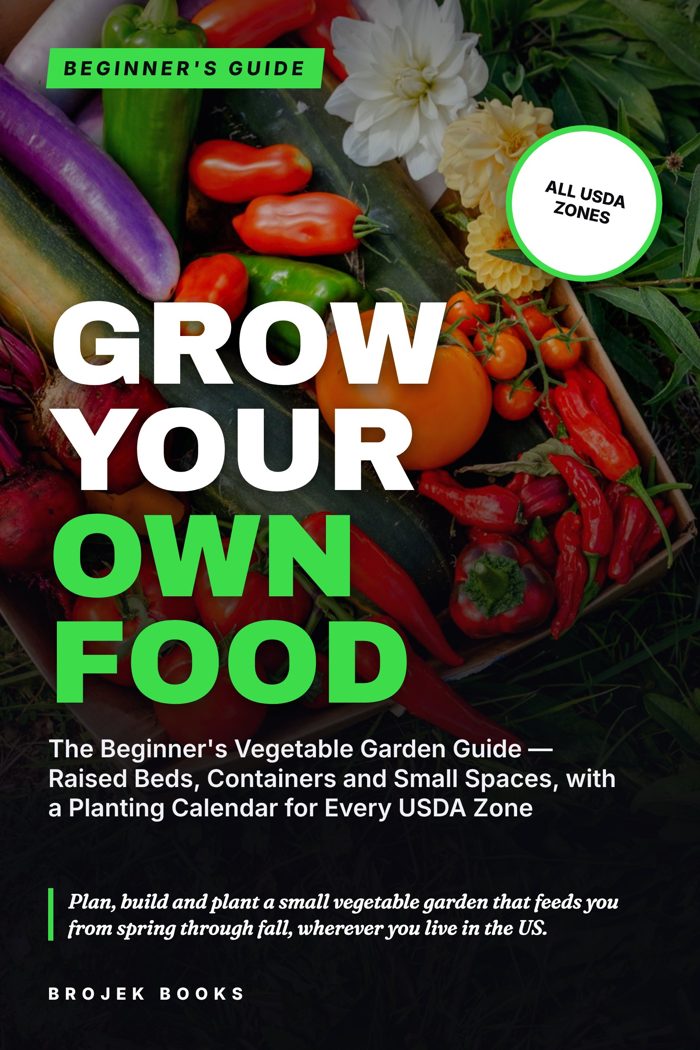 Grow Your Own Food